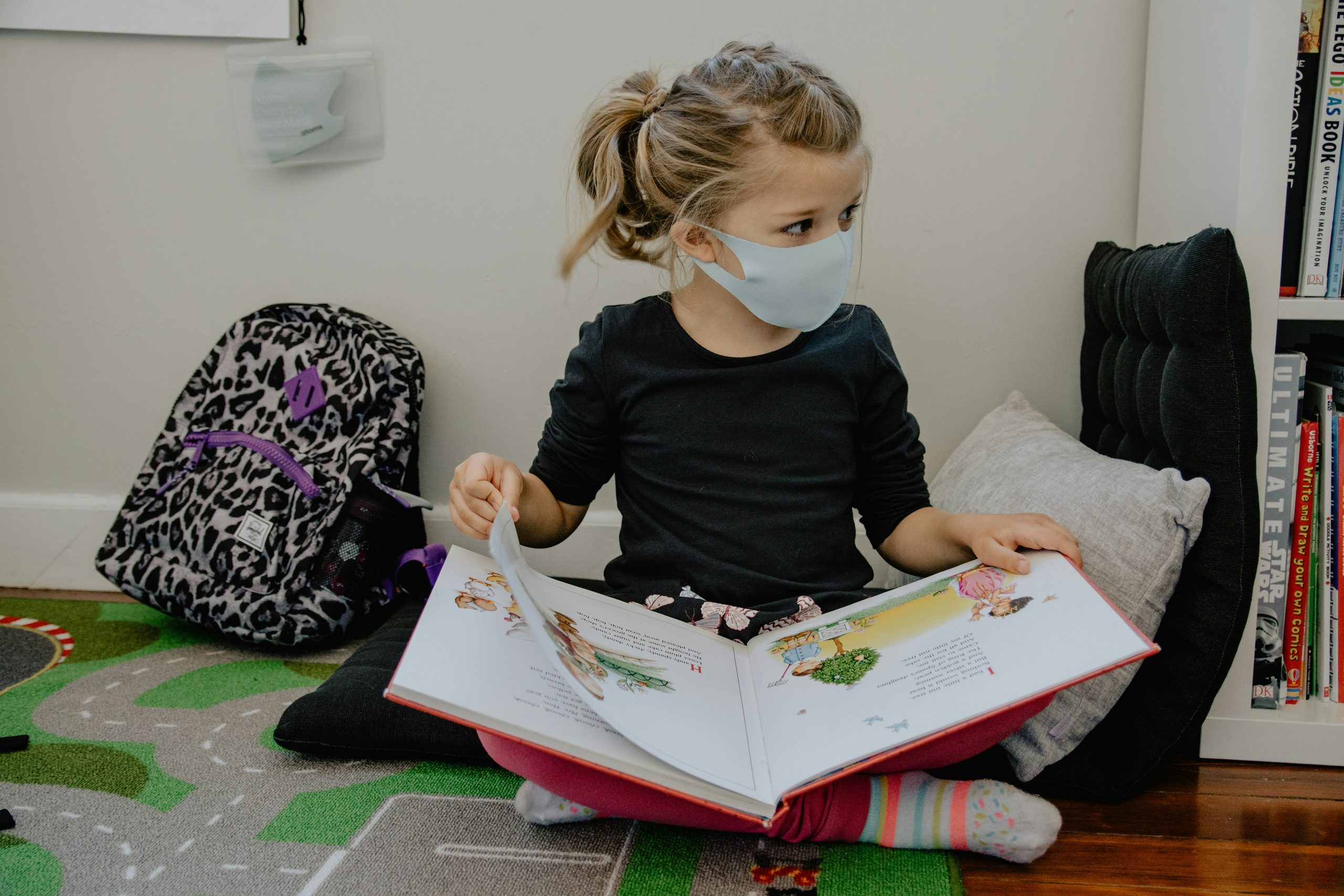
They’re fine in school.
Words that strike fear / rage / sorrow into the hearts of parents whose neurodivergent children are struggling. Add to the mix: they’re a pleasure to teach, they don’t behave like that here, and there’s a parenting course at the Family Resource Centre...
Let’s interrogate what ‘fine in school’ usually means for neurodivergent children and their families:
Masking
This is the term used when people hide or suppress traits that aren’t seen as
desirable. Of course, school is a manufactured construct, there is a certain amount
of obedience and ‘acting as if’ for everyone involved, not least of all teachers.
However, if we’re asking neurodivergent children to suppress behaviours that are
integral parts of their daily functioning and regulation, it can be incredibly damaging.
Masking means disguising behaviours that are not neurotypical, or viewed as
‘normal’. For example, the urge to self-soothe with stimming (see our blog explaining
how Behaviour is Communication for more about that), fidgeting, following certain
patterns or repetitions in language, etc. When a neurodivergent person masks, they
are concealing their true identity, their true feelings, and expending an enormous
amount of emotional energy in maintaining a façade of ‘fine’. Masking is exhausting,
and terrible for the nervous system long-term.
Add to that the fact that people-pleasing is a common trait of neurodivergent children
- particularly girls, who are often able to socially mask incredibly believably - this might present to the teacher a child who is:
Docile
Compliant
Quiet
Friendly
Ready to learn
Would we be so pleased to praise the above, and assure parents their children were
‘fine’ if we re-framed those words as:
Shutdown
Submissive
Selectively non-speaking
Ingratiating
Performative
We must continue to be curious. When a parent comes to us with concerns that their
child isn’t coping, that they meltdown at home, that they’re refusing school, and
they’re asking for enhanced support, our questions should always be:
What is the child suppressing at school, that means they ‘explode’ the minute
they get home?
What is it about the school environment that makes them compliant, and what
is released at home?
What does ‘readiness to learn’ really look like? Hint: it’s not always eye-
contact, sitting still, and empty hands.
What can we do about our classroom environment and communication with
children that ensures they do not need to mask what is inherent?
Can we look beyond ‘fine’ as a marker of thriving, not just surviving?
Of course, there will be incidences when a child’s home environment is not positive,
nurturing, or safe, and those avenues must be explored in line with relevant safeguarding
processes. Sole responsibility for a child’s behaviours does not rest with their families.
Children who are ‘fine’ fly under the radar, steadily building challenges that manifest
later in their school, or adult lives. A child who is ‘fine’ and a pleasure to teach, often
translates as a child who doesn’t give me any grief. Is that really what we want, or
do we want to raise a generation who are emotionally articulate, compassionate, and
honest?
Final points. Sit with these:
Parents do not want their children to need extra support. Parents do not want their
children to go through the hurdles of assessments, and student support plans/IEPs.
They do not want ‘special treatment’. They want their children to be happy. So when
they come to you concerned they’re not happy, please believe them.